Call NowCall
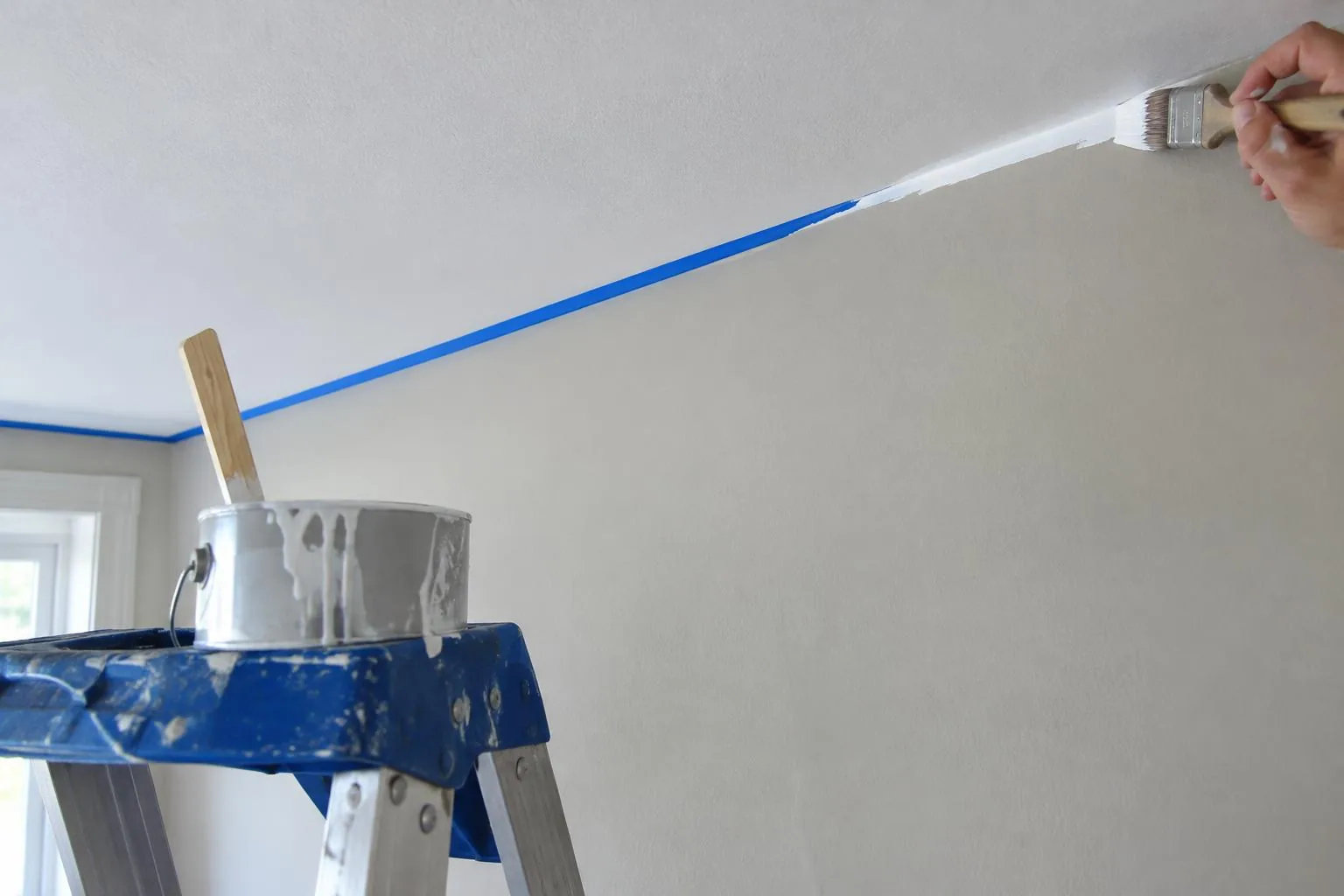
Brush cutting in a primed ceiling edge along blue tape, paint can on a stepladder

Priming And Painting Hampton VA: Interior Painting and Ceiling Painting

Clean Priming and Painting and interior painting for Hampton, VA ceilings and walls

  • Free estimate, room by room
  • Licensed and insured
  • One crew from scrape to paint

Hampton Popcorn Ceiling Removal provides priming and painting for Hampton homeowners, landlords and business owners whose ceilings have recently been scraped, skimmed or repaired. Raw compound soaks up color unevenly, so a sealing coat goes on first. Two coats of finish paint follow, rolled and cut in cleanly, which turns ceiling painting into the last easy stage, with the room ready for use again at once.

Why homeowners choose us:

  • Free estimate, room by room each ceiling, its finish and its repairs listed before work starts
  • Licensed and insured proof of coverage sent whenever you ask
  • One crew from scrape to paint repairs, skim coat and paint with no second trade to schedule
  • Rooms sealed in plastic sheeting taped at the walls and carried out with the debris

Painting is the last stage of nearly every job started by a crew with 15+ years on ceilings and drywall. The same people scrape, repair and paint, so the surface is prepared with paint in mind. Nobody blames an earlier trade for a blotchy ceiling or a stain that returns. Hundreds of rooms have gone through that single sequence, and the crew keeps the process the same on every one.

Get a FREE Popcorn Ceiling Removal Quote

No obligation. Free quote.

What Priming and Painting Involves in Hampton, VA

Paint is only as good as the surface beneath it, and a lasting finish takes more than two quick coats. Interior painting here means careful preparation, a sealing coat and patient rolling. To prime and paint a ceiling after a skim coat or a repair, a typical Hampton job follows these steps:

  • Surface checked The crew looks for dust, gloss, stains and soft spots, since each one changes the primer or the prep.
  • Room masked Floors, trim, windows and fixtures are covered so edges stay crisp and drips never reach the finished surfaces.
  • Dust and grit cleaned off Sanding leaves a fine film, and primer will not bond to it, so the ceiling is wiped down first.
  • Stain blocking primer applied Water rings, smoke marks and tannin stains are sealed so they stop bleeding through the new color.
  • General primer on new compound Fresh patches and skim coats receive a coat of primer that evens out how the surface absorbs paint.
  • Ceiling cut in at the edges A brush lays a clean line at the walls, corners and fixtures before the roller goes on.
  • Two coats rolled on Ceiling paint goes on in two thin coats with a roller that suits the surface, and the second coat waits for the first to dry.
  • Walls and trim as needed Matching paint can cover walls, trim and doors when you want the whole room refreshed together.
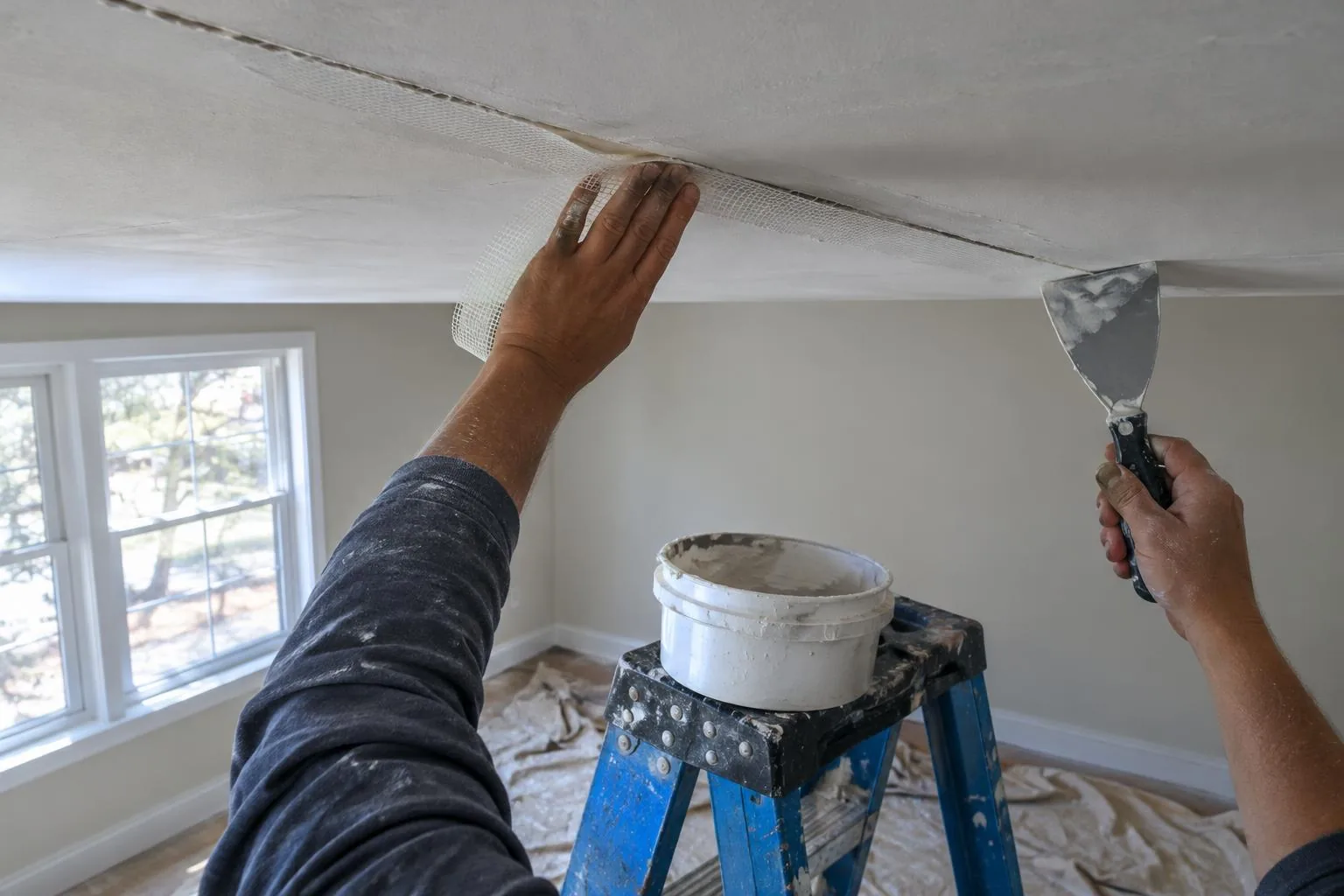
Hands pressing mesh tape over a ceiling crack with a joint knife in the other hand, compound bucket on a stepladder

Signs You Need Priming and Painting in Hampton

When bare compound or old paint is not good enough

  • Fresh patches and skim coats New compound is porous and takes paint unevenly, which leaves dull spots called flashing.
  • Stains bleeding through Water marks and smoke stains come back through ordinary paint within days unless they are sealed.
  • Peeling or chalky paint Old coatings that flake or rub off need scraping and primer before a new coat can hold.
  • A color change Going from dark to light, or the reverse, takes primer and extra coats to avoid showing the old color.
  • A ceiling that looks dingy Years of dust, cooking film and yellowing leave a surface that only a clean repaint can restore.

Why Painting Ceilings Is Trickier in Hampton

Hampton’s housing and weather add three considerations to ceiling paint.

Warm air changes how paint dries

July highs in Hampton average 88°F. In heat, the surface of a paint film can dry before the layer beneath it, which leaves roller marks and weak bonding. The crew opens windows carefully, avoids direct fans on wet paint and gives each coat the full time it needs. A coat that feels dry on top may still be soft below, so the second coat waits until a gentle test shows it is ready.

Older surfaces carry old stains

With a median build year of 1974, many Hampton ceilings have collected water rings and smoke marks over fifty years. Ordinary paint covers them for a few weeks before they return, so a stain-blocking primer goes on before any color. On large stains, the crew also confirms the source of the leak has been fixed. That matters most for paint after drywall repair, since a patch over a live leak will stain again whatever primer sits on top of it.

Bare compound needs a sealing coat

Skim coats and patches soak up paint far faster than the surrounding surface. Without a sealing coat, the repaired areas look flat and dull next to the rest of the ceiling. One coat of primer evens it out, and the finish coats then dry to one consistent sheen across the whole ceiling. That consistency is what separates a ceiling that looks professionally finished from one where every repair can be found.

How Much Does Priming and Painting Cost in Hampton, VA?

Ceiling size, stains and the number of coats all drive the cost of painting. Your final price comes from the estimate, written after the crew has walked the room.

JobTypical priceKey variables
Prime and paint a ceiling, one room$250 to $400ceiling size, stain-blocking primer, number of coats
Popcorn removal, one bedroom ceiling$400 to $675ceiling height, furniture to cover
Popcorn removal, main living level$1,525 to $2,550room count, fixtures to mask, repairs beneath the texture
Skim coat to a smooth finish, several rooms$700 to $1,200condition of the board, standard or Level 5 finish
Ceiling drywall repair, large section$450 to $1,200size of the section, backing, access

Our Priming and Painting Process in Hampton, VA

Five steps carry a ceiling from prepared board to a finished coat, and each coat needs to dry fully before the next.

1. Check the surface

The crew inspects the ceiling in good light, running a hand over repaired areas and looking for stains, gloss and loose paint. Any flaw that would show through paint is marked. The check decides which primer to use and how many coats will be needed, and it tells us whether more drywall repair must come first.

2. Clean and mask

Dust is wiped from the surface and floors are covered. Trim, windows, light fixtures and vents are masked with tape and plastic so the new color stops where it should. Careful masking takes time, but it is the reason the edges look sharp and the room needs no cleanup beyond a sweep once the work is done.

3. Prime the ceiling

Stain-blocking primer goes over marks and discolored areas, and a general primer covers new compound and patches. The primer is rolled evenly and left to dry completely, usually for several hours. A tacky primer coat grabs the roller and leaves a rough, pulled finish. This coat is the base for everything above it, and skipping it is the most common cause of flashing, blotches and stains that return.

4. Paint the first coat

After a brush cuts in the edges, a roller lays the first coat across the ceiling in overlapping strokes, working from one wall toward the other to keep a wet edge. A thin coat applied evenly beats a thick one, which sags and leaves lines. The ceiling then dries before the second coat, and the crew keeps windows cracked so the paint cures without trapping moisture.

5. Finish coat and walk through

A second coat deepens the color and hides any thin spots. Tape comes off while the paint is still slightly soft, leaving crisp lines, and you look over each ceiling under your own lights. Anything that looks off is corrected before the crew leaves. Plastic, drop cloths and empty cans go out with us, and the floors are swept.

Priming and Painting FAQs: Hampton, VA

How much does priming and painting a ceiling cost in Hampton?

One ceiling typically costs $250 to $400 in Hampton, depending on size, stains and the number of coats. Tall rooms and heavy repairs add to the figure, and the estimate fixes the final price.

Do I need primer on a repaired ceiling?

A primer coat is always needed. Fresh compound takes in paint unevenly, and primer levels that out so the finish cures consistently. Our popcorn ceiling removal jobs include a sealing coat before color.

What is stain blocking primer?

It is a sealing coat made to lock in water rings, smoke marks and other stains so they cannot bleed through the finish paint. Ordinary paint covers stains briefly, and they come back, while a blocking primer holds them.

How many coats of paint does a ceiling need?

Two finish coats over primer is the standard. A dramatic color change or a heavily stained ceiling may need a third, and the estimate says so when the crew has seen the room.

How long does ceiling painting take?

One room typically takes a day, with extra time for primer to dry before the finish coats. A whole house takes three to five days when painting follows removal and repairs, since each stage must cure.

Do you paint walls as well as ceilings?

Walls, trim and doors can be painted at the same visit so the room has one consistent look. The crew starts with the ceiling, then moves to walls so no drips land on a finished surface.

Hampton Popcorn Ceiling Removal serves Hampton and Hampton Roads.

Get a Free Priming and Painting Quote in Hampton, VA

Mon–Fri 7am–6pm · Sat 8am–2pm

Call Now Free Quote